Renovating a bathroom in New York City is a rite of passage for homeowners and condo/co-op owners. It’s exciting, it’s stressful, and it’s usually more expensive than you expect. Even the smallest bathroom can feel like a full-scale construction project once you add in city permits, building rules, and the realities of working in a prewar building with ancient plumbing.
The good news is: there are smart ways to keep costs under control without ending up with a cheap-looking result. This guide breaks down what really drives the cost of a bathroom remodel in NYC, what kinds of decisions help you save, and what to expect in terms of
pricing, timelines, and common pitfalls.
Typical Bathroom Renovation Costs in NYC
New Yorkers are often shocked when they hear the numbers, but bathroom renovations here run significantly higher than in other parts of the country. Why? Higher labor rates, building regulations, DOB code, and the complexity of older buildings all add up.
By square foot
Most contractors in NYC will tell you to expect $700 to $1,200 per square foot for a bathroom renovation.
By scope of job
Small bathroom (around 5×8 feet): $25,000 to $45,000
Medium bathroom (around 7×9 feet): $40,000 to $60,000
Large or luxury bathroom (around 10×10 feet or more): $70,000 to $100,000+
Keep in mind these are all-in costs meaning labor, permits, demolition, rough plumbing, electrical, tile, fixtures, and finishes. If you only budget for materials and forget about labor or filings, or vice versa you’ll be in for sticker shock later. Fair warning – finishes come in qualities as expensive as you can imagine. Value engineering here can go a long way.
What Spikes Bathroom Renovation Costs in NYC
Some costs are unavoidable, but many of the biggest budget-killers come down to design choices. Here are the main culprits:
1. Moving Plumbing Fixtures
Every time you move a toilet, sink, or tub, the plumber needs to (possibly) open walls, reroute pipes, and (possibly) file new plans with the Department of Buildings (DOB). Toilets are especially expensive to move because of the way waste stacks are set up in NYC buildings. That “can we just shift it a couple feet?” request can add $5,000 to $15,000, if you’re unlucky, or live in a building with a slab floor.
2. High-End or Specialty Materials
Imported marble, handmade tile, or luxury fixtures can easily double your finish budget. It’s not unusual for a single custom vanity to cost $5,000–$10,000, while a stock vanity from IKEA or Home Depot runs under $1,000. Mixing highs and lows here can help keep budgets tight while still achieving the look you’re going after.
3. Custom Tile Patterns
Diagonal layouts, herringbone, or small mosaics look amazing but can add days of labor. Labor is often more expensive than the tile itself. A large format rectified tile install might cost $4,000 in labor, while a 2×6 handmade tile could run $8,000++.
4. Building Management Rules
Some co-ops and condos restrict work hours (like 9–3), require engineering review, or demand multiple inspections. That means a job that could take 5 weeks in a private house might stretch to 10 in a Manhattan co-op.
5. Permits and DOB Filings
If you’re altering plumbing lines or electrical circuits, you’ll need permits. Filing with DOB adds cost and time, but it’s not something you can usually skip. Depending on the complexity, permits and filings can add $3,000 to $10,000.
How to Keep Bathroom Renovation Costs Down
Here’s where you can make smart choices that save serious money without sacrificing quality.
1. Keep the Layout the Same
This is the single biggest saver. If the toilet, sink, and shower stay in the same spots, you avoid expensive plumbing changes and permits. You can still make the bathroom feel brand new with updated finishes.
2. Choose Large-Format Tiles
Labor is charged by time, not just square footage. Large-format tiles cover more wall with fewer cuts, so the installation is faster. They also mean fewer grout lines to clean later.
3. Use Semi-Custom Vanities
You don’t need a $10,000 custom-built vanity to get a sleek look. Semi-custom or modular vanities from places like IKEA, Home Depot, or specialty retailers can be dressed up with nicer countertops and hardware for a fraction of the cost. If you do go with American, go with a local cabinet maker – sometimes they are comparable to the box stores.
4. Stick With Mid-Range Fixtures
Kohler, Delta, and Moen all make solid, reliable fixtures that look great and don’t have the boutique markup of European imports. A $300 faucet works just as well as a $1,200 one, and most guests won’t notice the difference.
5. Order Materials Early
One of the biggest hidden costs in NYC renovations is downtime. If your tile is backordered, the job grinds to a halt and you may pay contractors to sit idle. Have all your finishes stored in your apartment or your contractors warehouse before demo starts.

Timeline: What Speeds Up vs. What Slows Down a Bathroom Renovation
Most NYC bathrooms take 3–6 weeks to renovate if everything goes smoothly. But there are plenty of things that can stretch that to 3 months or more.
If you want to speed up your NYC bathroom renovation:
•Have all materials on site before demo.
•Have clear design decisions made early.
•Keep the layout the same.
•Work with a contractor familiar with NYC building logistics
Things that will slow down your NYC bathroom renovation
•DOB inspections and permit delays.
•Building management approvals (alteration agreements, insurance requirements, board approvals).
•Mid-project design changes or decisions not made before start of project.
•Special-order materials stuck in shipping purgatory.
Real NYC Bathroom Stories
The $12,000 toilet move: A client in Park Slope wanted the toilet moved two feet to “open up the space.” That tiny change required breaking into the concrete slab, filing a new plumbing riser plan, and waiting on DOB approval. What should have been a 5-week job turned into 12 weeks and $12K extra.
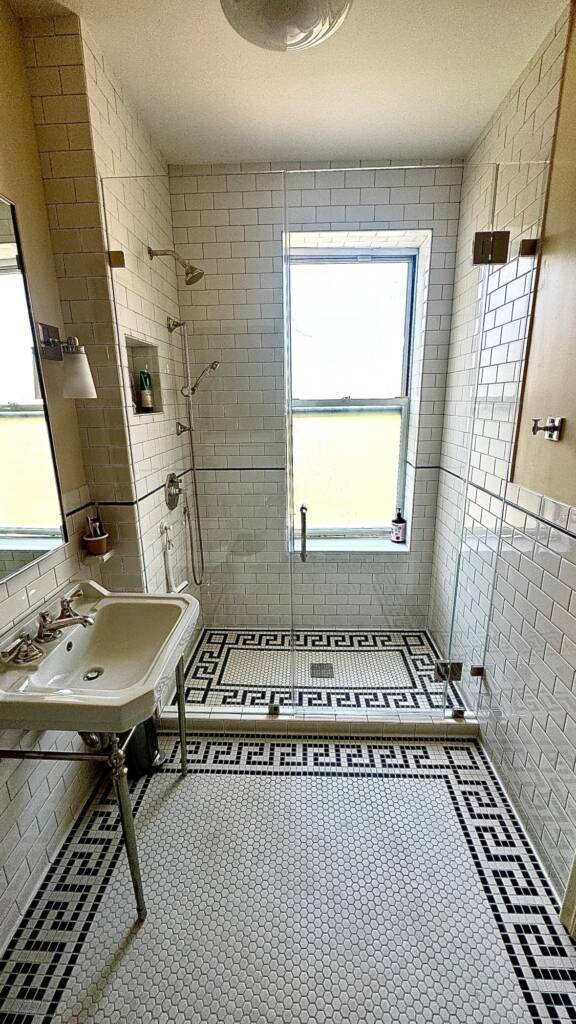
The subway tile win: Another client in Queens kept the exact layout and chose white subway tile with a quartz-topped vanity. The result looked clean and modern, and the project wrapped in 4 weeks flat. By skipping layout changes and choosing mid-range finishes, the client saved around $20K compared to comps in her neighborhood with similar bathrooms.

Hidden Costs Homeowners Often Forget
Disposal fees: Getting debris out of a fifth-floor walk-up isn’t free.
Waterproofing: Good contractors will do proper waterproofing behind tile, and it adds cost. But skipping it leads to leaks and mold.
Access panels: Some buildings require new access panels for shutoff valves.
Insurance and paperwork: Your building may require your contractor to carry $2M in liability insurance, not to mention proof of Workers Compensation Insurance and Disability Insurance, which rules out cheaper “handyman” jobs.
Tips for First-Time Renovators
Ask your building upfront about their renovation rules before you design anything. Some won’t allow certain shower types, or they might limit construction hours. Budget a 10%–15% contingency for surprises. Old NYC buildings always have surprises. Don’t cut corners on waterproofing and plumbing. Those are the areas where cheap work comes back to haunt you. Get multiple bids, but compare apples to apples. One contractor’s $30K estimate may not include permits, while another’s $40K does.
Final Word
Renovating a bathroom in NYC is not cheap, but it doesn’t have to spiral out of control either. The key is making smart design choices that minimize labor, planning ahead so materials don’t cause delays, and working with someone who understands NYC’s quirks.
At the end of the day, the most expensive bathroom isn’t always the nicest, it’s the one that drags on for three months and leaves you showering at the gym!
Planning a renovation in Brooklyn, Queens, Manhattan, or anywhere in NYC? Work with a contractor who maps out every detail before the first hammer swings. Call us at 718-989-1240 or email info@specland.com to get started with SpecLand Group today.